
Key Skincare Ingredients to Treat Sun-Damaged Skin
Living on the Central Coast is a privilege — the beaches, the lifestyle, the sunshine. But decades of sun exposure leave their mark on the skin, and for many of our patients at Rejuved, sun damage is one of their primary concerns when they come in for a skin consultation.
The good news is that the science of skincare has come a long way. There are now several clinically validated ingredients that can meaningfully address the signs of sun damage — from uneven pigmentation and dullness to fine lines, rough texture and loss of firmness. Knowing which ingredients to look for, and how to use them correctly, makes all the difference.
Here's what we recommend, and why.

Understanding Sun Damage First
Before we talk about ingredients, it helps to understand what sun damage actually does to the skin.
Ultraviolet radiation — both UVA and UVB — affects the skin in two distinct ways. UVB rays are responsible for the immediate burning and reddening we associate with sun exposure. UVA rays penetrate more deeply and are responsible for what dermatologists call photoageing — the breakdown of collagen and elastin, the development of pigmentation, and the long-term structural changes to skin that accumulate over years and decades.
The result is skin that looks older than it is. Pigmentation appears uneven. Texture becomes rough. Fine lines deepen. The skin loses its natural glow and luminosity. In more advanced cases, skin may feel thickened in some areas, with visible broken capillaries or a reddened, uneven tone.
The right ingredients can target each of these concerns — but consistency and a well-constructed routine are everything.

Vitamin A (Retinol and Retinaldehyde)
If there is one ingredient with the most robust clinical evidence behind it for treating the signs of photoageing, it is Vitamin A. Retinoids — the family of Vitamin A derivatives — have decades of peer-reviewed research supporting their ability to stimulate collagen production, increase cellular turnover, reduce the appearance of fine lines and improve uneven pigmentation.
Vitamin A works by communicating with skin cells at a receptor level, essentially encouraging the skin to behave more like younger, healthier skin. It accelerates the shedding of dull, damaged surface cells and promotes the formation of new, healthier ones beneath.
For those new to Vitamin A, we always recommend starting slowly — a low concentration used every second or third evening, building frequency over time as the skin acclimatises. Some initial sensitivity is normal. A well-formulated Vitamin A product used consistently over six to twelve months will deliver genuinely meaningful results.
At Rejuved we stock a number of Vitamin A formulations suited to different skin types and levels of experience — your treating therapist can guide you to the right starting point.
Vitamin C
Vitamin C is one of the most powerful antioxidant ingredients available in skincare, and it plays a crucial role in addressing sun-damaged skin for two key reasons: it neutralises free radical damage caused by UV exposure, and it actively inhibits the enzyme responsible for melanin production — making it a valuable ingredient for anyone managing pigmentation.
A well-formulated Vitamin C serum used in the morning, underneath SPF, offers a meaningful layer of antioxidant protection against ongoing environmental damage while simultaneously working to brighten and even out existing discolouration.
Not all Vitamin C is equal. L-ascorbic acid is the most well-researched form but is also the most unstable — it oxidises quickly when exposed to light and air. Look for products in opaque, airless packaging with a concentration of 10–20% for efficacy. At Rejuved, we work with brands that formulate their Vitamin C carefully for both stability and results.
Niacinamide
Niacinamide — also known as Vitamin B3 — is one of the most versatile and well-tolerated active ingredients in skincare. For sun-damaged skin specifically, its most relevant benefits include its ability to visibly reduce pigmentation, strengthen the skin barrier, improve overall skin tone and reduce the appearance of enlarged pores.
Unlike some actives, niacinamide is well suited to sensitive skin and can generally be used morning and evening without irritation. It also works well layered with other actives, making it a valuable addition to any comprehensive routine targeting sun damage.
Alpha Hydroxy Acids (AHAs)
Alpha hydroxy acids — including glycolic acid and lactic acid — are chemical exfoliants that work by dissolving the bonds between dead skin cells on the surface, encouraging their shedding and revealing brighter, more even skin underneath.
For sun-damaged skin, AHAs serve a dual purpose: they immediately improve the appearance of dullness and rough texture, and over time they support cellular turnover in a way that allows other active ingredients — your Vitamin A, your Vitamin C — to penetrate more effectively and do their job better.
Glycolic acid, derived from sugar cane, has the smallest molecular size of the AHAs and therefore penetrates most deeply. Lactic acid, derived from milk, is slightly larger and more hydrating — better suited to sensitive or drier skin types.
Professional peels using AHAs — like the Synergie peels we offer at Rejuved — take this a step further, using higher concentrations in a controlled clinical environment to deliver more intensive results. These are particularly effective when combined with skin needling as part of a comprehensive skin programme.
SPF — The Non-Negotiable
No conversation about treating sun-damaged skin is complete without addressing SPF. Every single active ingredient mentioned above — Vitamin A, Vitamin C, AHAs — works harder and delivers better results when it is not being undermined by ongoing, unprotected UV exposure.
Daily broad-spectrum SPF 50+ is non-negotiable. Full stop. Not just at the beach. Every day, year-round, regardless of whether you're sitting near a window, driving or spending time outdoors. UVA rays — the ones responsible for photoageing — penetrate glass. They are present even on overcast days.
We recommend a cosmeceutical-grade SPF that sits comfortably under makeup and doesn't leave a white cast. Our team at Rejuved can help you find one that suits your skin type and that you'll actually want to wear every day — because the best SPF is always the one you'll use consistently.
How Rejuved Can Help
Understanding which ingredients you need is one thing — knowing how to layer them, in what order, at what concentration, and alongside which in-clinic treatments is another. At Rejuved, our dermal therapists and dermal clinician take a comprehensive approach to skin health, beginning with a thorough skin consultation to assess your concerns, analyse your current routine and recommend a plan that makes sense for your skin.
For patients dealing with sun damage on the Central Coast, a combination of the right cosmeceutical homecare and targeted in-clinic treatments — including skin needling, Laser Genesis and professional peels — can produce genuinely meaningful results over time.
If you'd like to understand more about what's happening in your skin and what can be done about it, we'd love to see you in clinic.
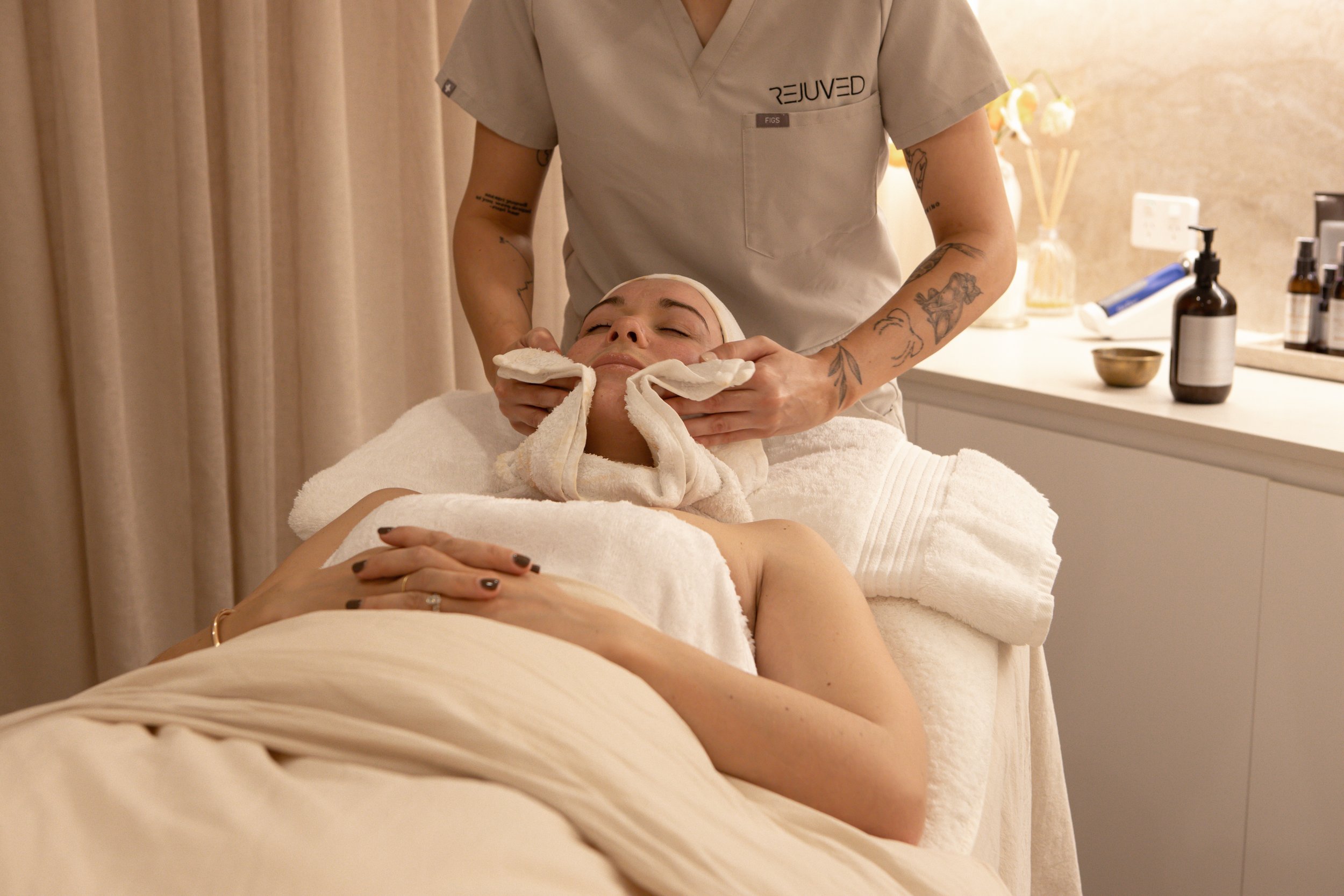
If you’re ready to better understand your skin and take a more intentional approach to your treatment journey, we’re here to guide you.
Book a consultation with our team and start your Rejuved journey today.
